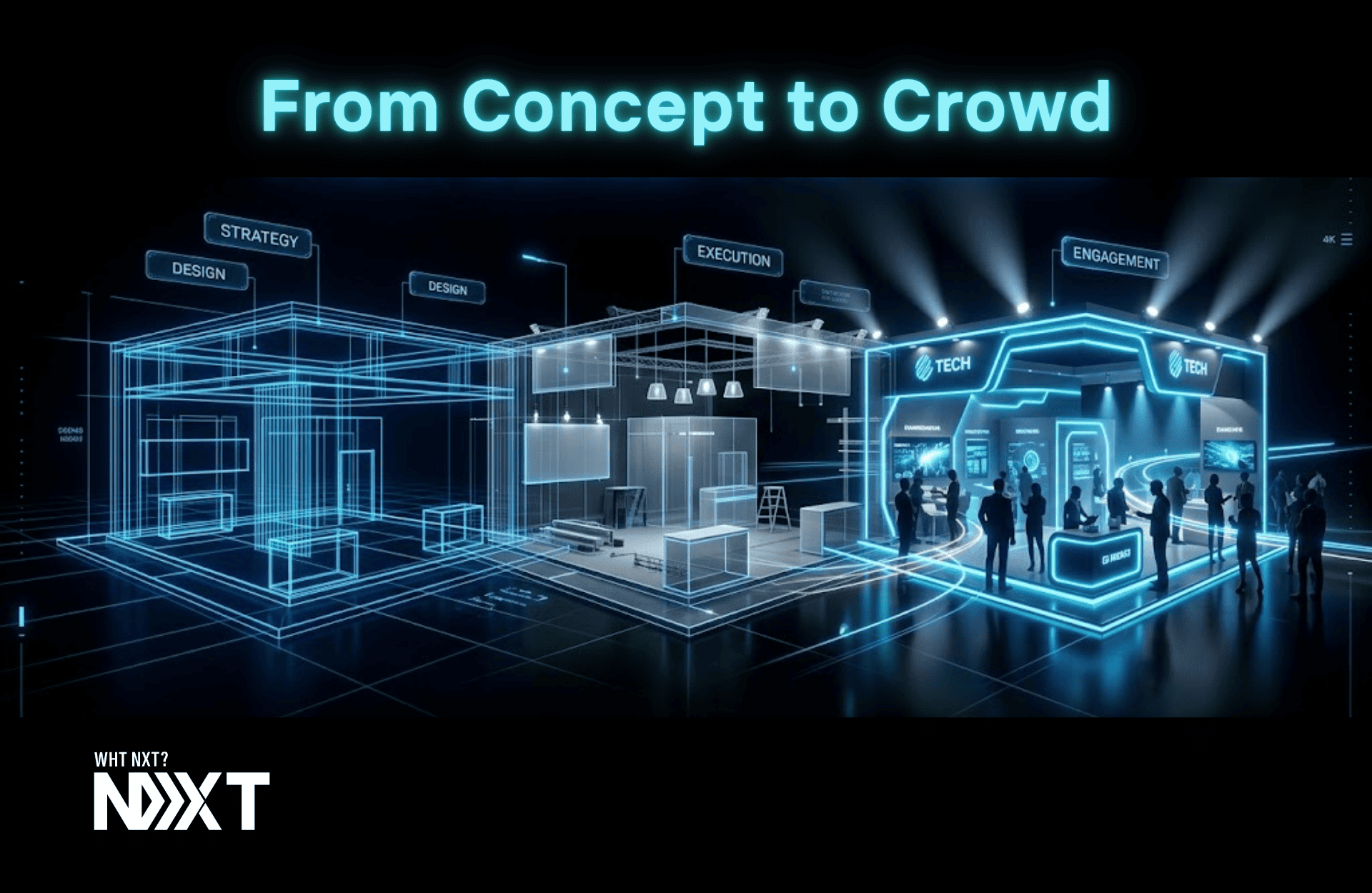
From Concept to Crowd: How a Winning Stall is Built
Most trade show attendees walk onto an exhibition floor and see a sea of lights, logos, and high-definition screens. They see the "final act." But for the exhibitors who actually dominate the floor, the physical structure is merely the tip of the iceberg.
A winning stall isn't just a collection of plywood and vinyl; it is a meticulously engineered machine designed to capture attention, facilitate conversation, and convert a wandering passerby into a high-value lead. Building a stall that draws a crowd requires a shift in mindset: moving away from "visual expense" toward strategic business investment.
Here is the step-by-step journey of how a high-impact exhibition stall moves from a blank page to a crowded floor.
1. Understanding the Objective: The North Star
Before a single line is drawn in CAD software, you must define what success looks like. A stall designed for B2B lead generation looks fundamentally different from one designed for a high-energy product launch.
- Lead Generation: Focuses on scan points and quick-engagement zones.
- Brand Awareness: Focuses on high-visibility signage and immersive "wow" factors.
- Relationship Building: Requires semi-private lounges and hospitable meeting spaces.
Pro Tip: Pick one primary goal. If you try to make your stall a retail outlet, a lounge, and a theater all at once, you’ll end up with a cluttered space that achieves nothing.
2. Concept & Creative Direction: Translating Brand into Space
A great exhibition stall design should feel like a physical manifestation of your website and corporate culture. The creative direction bridges the gap between your brand identity and 3D space.
- The Theme: Move beyond "modern and clean." Are you the "Safe Harbor" in a turbulent industry? Or the "Future-Forward Disruptor"?
- Messaging: Your "Headline" should be visible from 20 feet away. If a visitor can’t tell what you do within three seconds of looking at your stall, they will keep walking.
3. Designing for Behavior (The Psychology of Flow)
Successful experiential marketing design dictates how people move. You aren't just designing a booth; you are designing a journey.
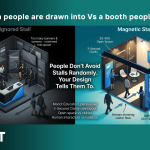
- The Decompression Zone: The first 2-3 feet of your stall. Don't block it with a reception desk. Let visitors step into your world before you confront them.
- Engagement Zones: Use the "Attract, Inform, Close" model. High-level visuals on the perimeter, interactive demos in the middle, and meeting tables at the back.
- The "Magnet" Point: Every winning stall has one central element—a VR demo, a unique sculpture, or a live presentation—that stops the "aisle-trudge."
4. Technical Planning & Execution
This is where exhibition booth planning meets reality. In many regions, specifically in Indian exhibitions, technical constraints like "no rigging" (hanging items from the ceiling) mean your structure must be entirely self-supporting and high-impact from the ground up.
- Material Selection: Use textures to stand out. Mix matte finishes with LED fabric lightboxes to create depth.
- Compliance: Ensure your designs meet fire safety and height regulations early to avoid last-minute on-site "surprises."
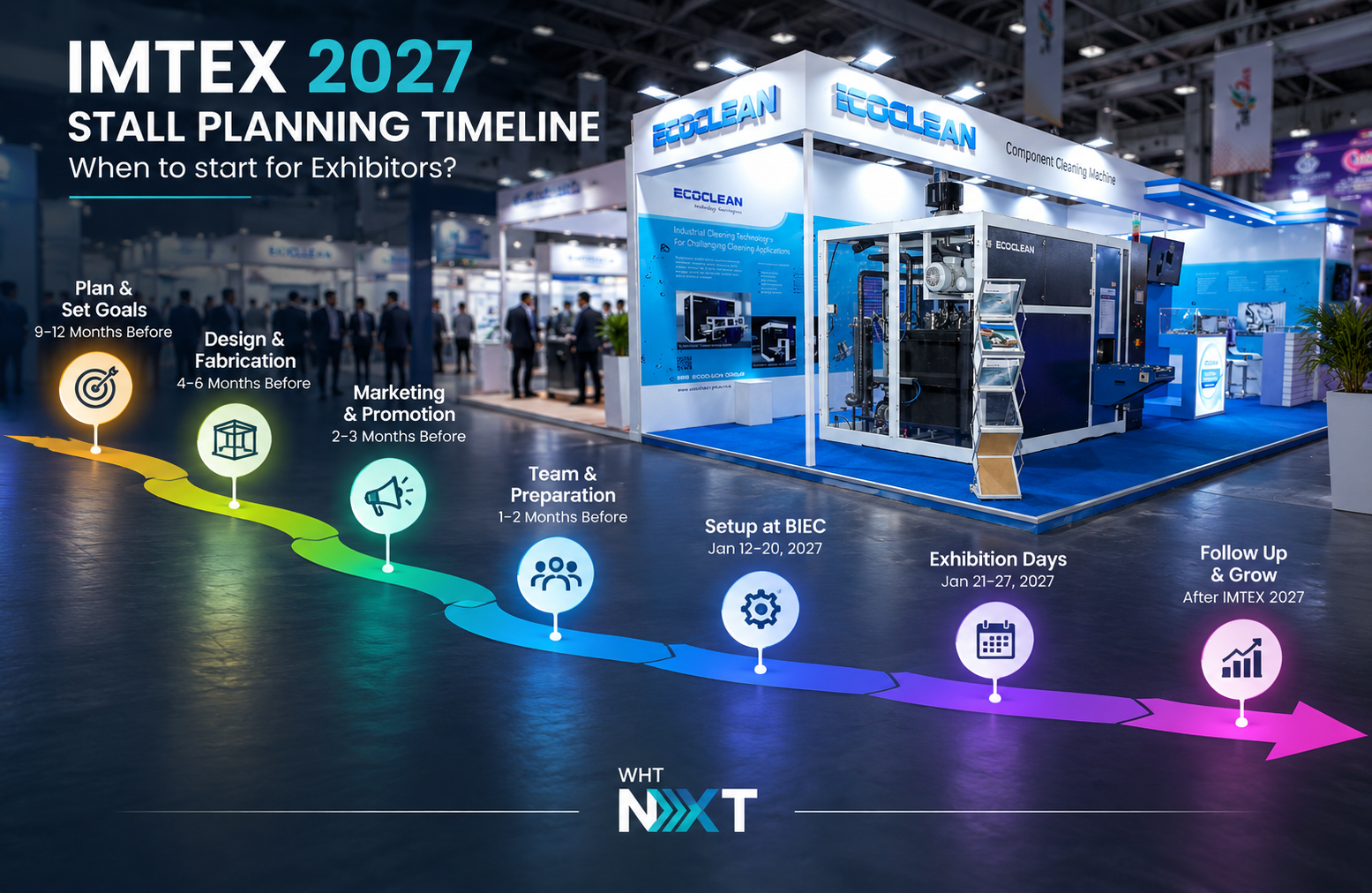
- The 3-2-1 Timeline: 3 months for design, 2 months for fabrication, 1 week for final logistics.
5. The On-Ground Experience: Lighting and Energy
Execution on the day of the event is what separates the pros from the amateurs.
- Lighting is Everything: Generic hall lighting is flat and yellow. Use localized spotlights and cool-white LEDs to make your products pop and create a "premium" aura.
- Staff Placement: Never let your staff sit behind a desk or huddle in a circle. They should be "active hosts" positioned at the edges of the engagement zones.
6. Post-Event Impact: Closing the Loop
The stall’s job doesn't end when the lights go out. Event marketing execution includes a seamless transition from the physical booth to the digital CRM.
- Instant Lead Capture: Use digital scanners with "qualifier" notes. A lead without context is just a name on a list.
- The 24-Hour Rule: Send a "Great meeting you" email within 24 hours while the physical memory of the stall is still fresh.
The Verdict: Engineering Success
A successful exhibition stall is never an accident. It is the result of trade show booth strategy meeting disciplined execution. When you stop viewing your stall as a "booth" and start viewing it as a "conversion environment," you stop hoping for a crowd and start engineering one.
Is your next event a gamble or a guaranteed ROI? Don't just show up—dominate. We specialize in turning complex brand objectives into high-impact physical realities. Let’s strategize your next move from concept to crowd.

एक टिप्पणी छोड़ें
आपका ईमेल पता प्रकाशित नहीं किया जाएगा। आवश्यक फ़ील्ड * से चिह्नित हैं